Garage Water Damage: Common Causes, Hidden Moisture & Repairs
Updated: 4 days ago

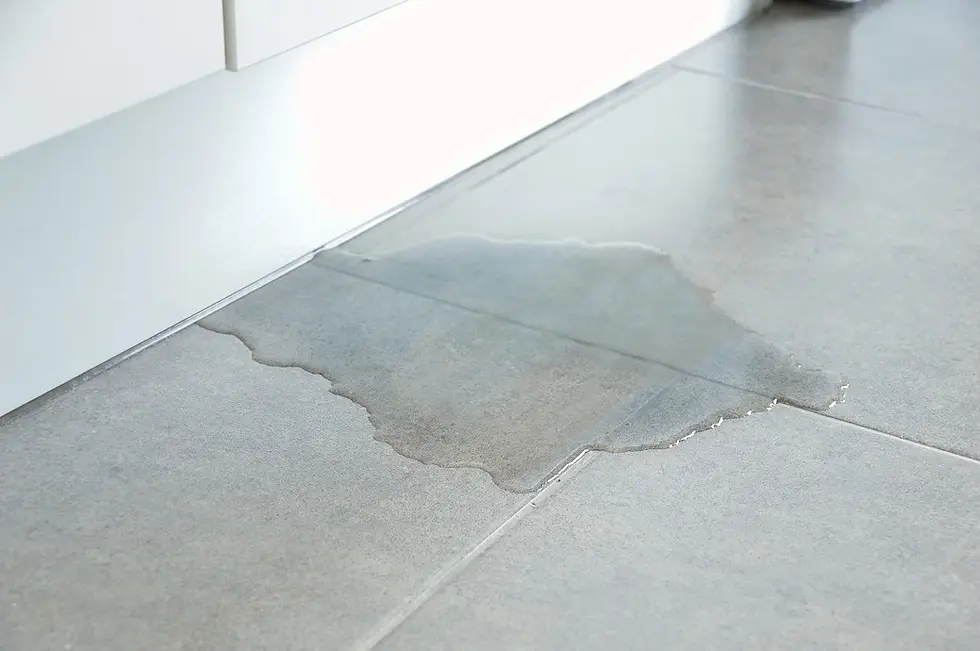
Water damage in a garage may seem minor, especially when water appears confined to a concrete floor. However, attached garages often share walls, doorways, and structural components with adjoining living spaces. When a water heater leaks, a plumbing line fails, or water escapes beneath the concrete slab, moisture can spread beyond the garage and damage the home.
Understanding how water travels, what materials may be affected, and when professional water damage restoration is necessary can help homeowners address problems before damage becomes more extensive.
Common Causes of Garage Water Damage
Several plumbing and appliance problems can introduce water into a residential garage.
Water heater leaks: A leaking tank, failed connection, or malfunctioning component can release water onto the garage floor. Depending on the severity, water heater leak restoration may involve drying nearby walls, framing, and adjoining rooms.
Water softener leaks: Failed supply connections, fittings, or drain lines can allow water to accumulate around equipment and migrate toward surrounding building materials.
Laundry and appliance leaks: Damaged washing machine hoses, drain problems, and overflowing appliances can cause water damage in garages or adjacent utility rooms. These appliance leaks may affect walls, flooring, and cabinetry.
If a washing machine in or beside the garage overflows, check beyond the immediate puddle for water along shared walls and beneath adjoining flooring. Learn how to limit water damage after a washing machine overflow, including safe shutoff steps and when towels and household fans may be inadequate.
Slab leaks: Plumbing lines beneath a concrete foundation can develop leaks, allowing moisture to migrate through cracks, joints, or other openings. Slab leak water damage may affect the garage and nearby interior spaces without an obvious surface-level source.
How Garage Water Damage Spreads Into the House
Water does not necessarily remain where a leak originates.
Attached garages commonly share framed walls with kitchens, laundry rooms, hallways, or other finished areas. When water accumulates along these walls, moisture can reach bottom plates, drywall, and insulation.
Drywall absorbs water through its lower edges, allowing moisture to move upward through capillary action. Baseboards and wood framing may also become wet, even when visible damage appears limited.
Water can also travel beneath the doorway separating the garage from the house. Depending on floor elevations, thresholds, and construction details, moisture may reach finished flooring in adjoining rooms.
Hardwood, laminate, carpet, and underlayment can retain moisture beneath the surface, creating damage that is not immediately visible.
A dry-looking garage floor does not necessarily mean the surrounding structure is dry.
Hidden Moisture Inside Walls and Flooring
One challenge of garage water damage is determining how far moisture has traveled. Water accumulating around a water heater may already have reached concealed materials, including:
Drywall and insulation along shared walls
Wood bottom plates and framing
Baseboards, door casings, and trim
Flooring and underlayment in adjoining rooms
Cabinets and nearby built-in storage
Some materials can be dried and retained, while others require removal and replacement depending on their condition, the water source, and exposure time. Simply removing standing water or allowing the concrete to air-dry may leave moisture trapped inside surrounding materials. Learn more about what can happen when water damage is left untreated, including warning signs homeowners should watch for.
Moisture Mapping and Structural Drying
Once the leak has been stopped, the next step is identifying the extent of the water damage. Professional inspections use moisture meters and other equipment to locate affected materials and establish drying boundaries. This process, known as moisture mapping, helps determine where drying equipment or material removal may be necessary.
Depending on the conditions, structural drying may involve air movers, dehumidifiers, selective material removal, and ongoing moisture monitoring. Drying progress should be documented through moisture readings rather than relying solely on visual appearance.
The objective is to bring affected materials to appropriate drying targets before reconstruction begins.
Repairing Damage to Adjoining Living Spaces
After drying is complete, repairs can begin. Garage water damage may require drywall replacement, insulation installation, texture matching, painting, and replacement of affected trim or baseboards.
When moisture reaches finished living areas, flooring installation may also be necessary if existing materials cannot be retained. Coordinating drying with reconstruction services helps ensure concealed moisture has been addressed before new finishes are installed.
Visit our water damage restoration projects page to see examples of restoration and repair work.
Plumbing Repair vs. Water Damage Restoration
Repairing the source of a leak and restoring the resulting damage are two different services.
A licensed plumber may be needed to repair a water heater connection, replace a failed supply line, or locate and repair a slab leak.
However, stopping the leak does not remove moisture already absorbed into drywall, insulation, framing, or flooring.
Water damage restoration addresses these affected materials through moisture assessment, drying, necessary removal, and subsequent repairs. Both services may be required to return the home to its pre-damage condition.
Frequently Asked Questions About Garage Water Damage
Can water damage in a garage spread into the house?
Yes. Water can travel through shared walls, beneath door thresholds, and into adjoining rooms. Drywall, insulation, framing, and finished flooring may absorb moisture even when the visible water appears confined to the garage.
Can a leaking water heater damage garage walls?
Yes. Water from a leaking water heater can reach the bottom of surrounding walls and soak into drywall, insulation, and wood framing. Depending on the extent of moisture exposure, professional drying or replacement of affected materials may be necessary.
Does a wet garage floor require professional water damage restoration?
Not always. A small amount of water on an otherwise unaffected concrete floor may only require cleanup. However, when water reaches walls, structural materials, or adjoining living spaces, a professional moisture assessment can help identify concealed damage.
Will homeowners insurance cover garage water damage?
Coverage depends on the cause of the leak and the terms of the insurance policy. Sudden and accidental plumbing failures may be covered, while damage from ongoing leaks, maintenance issues, or flooding may be excluded. Homeowners should review their policy and contact their insurance provider.
Garage Water Damage Restoration in North Texas
Whether water originates from a garage water heater, water softener, laundry connection, or plumbing beneath the slab, the resulting damage may extend beyond the initial leak.
At Floors To Ceiling Restoration, we help North Texas homeowners address water damage through moisture assessment, structural drying, flooring repairs, and interior reconstruction.
If you've discovered water in your garage or noticed moisture affecting an adjoining room, contact us to discuss an inspection and the appropriate restoration steps.